
History Gets Sexypants: Top 25 Broadway Shows That Really Happened

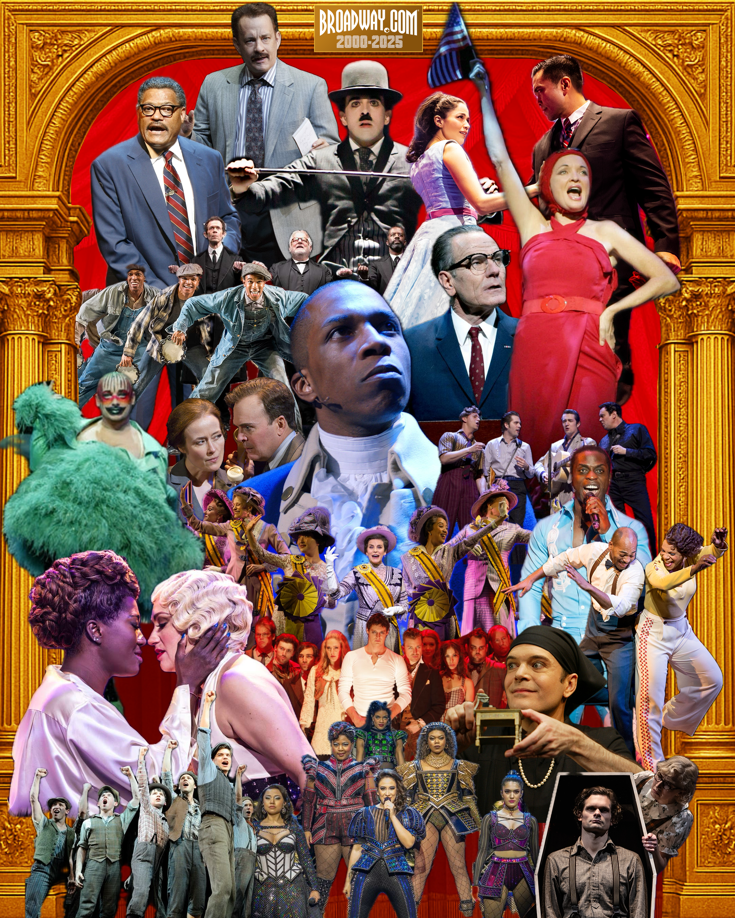
Of all the art forms, theater may be the best at making the distant past feel immediate. In the right storytelling hands, even long-dead characters and stories can come vividly to life. Perhaps that’s why the stuff of history books has a natural and regular home on the stage. Plus, history is filled with compelling stories—from Tudor queens and plucky newsboys to presidents and revolutionaries—filled with themes that resonate today.
As part of Broadway.com's 25th anniversary celebration, we've looked back at major trends and milestones, memorable Tony moments, outstanding opening numbers and all things British. Now, here’s a look back at some of the retold history that's graced Broadway stages in the past quarter century. Listed in no particular order (because how could we play favorites?), revisit the stories that textbooks just couldn't contain.
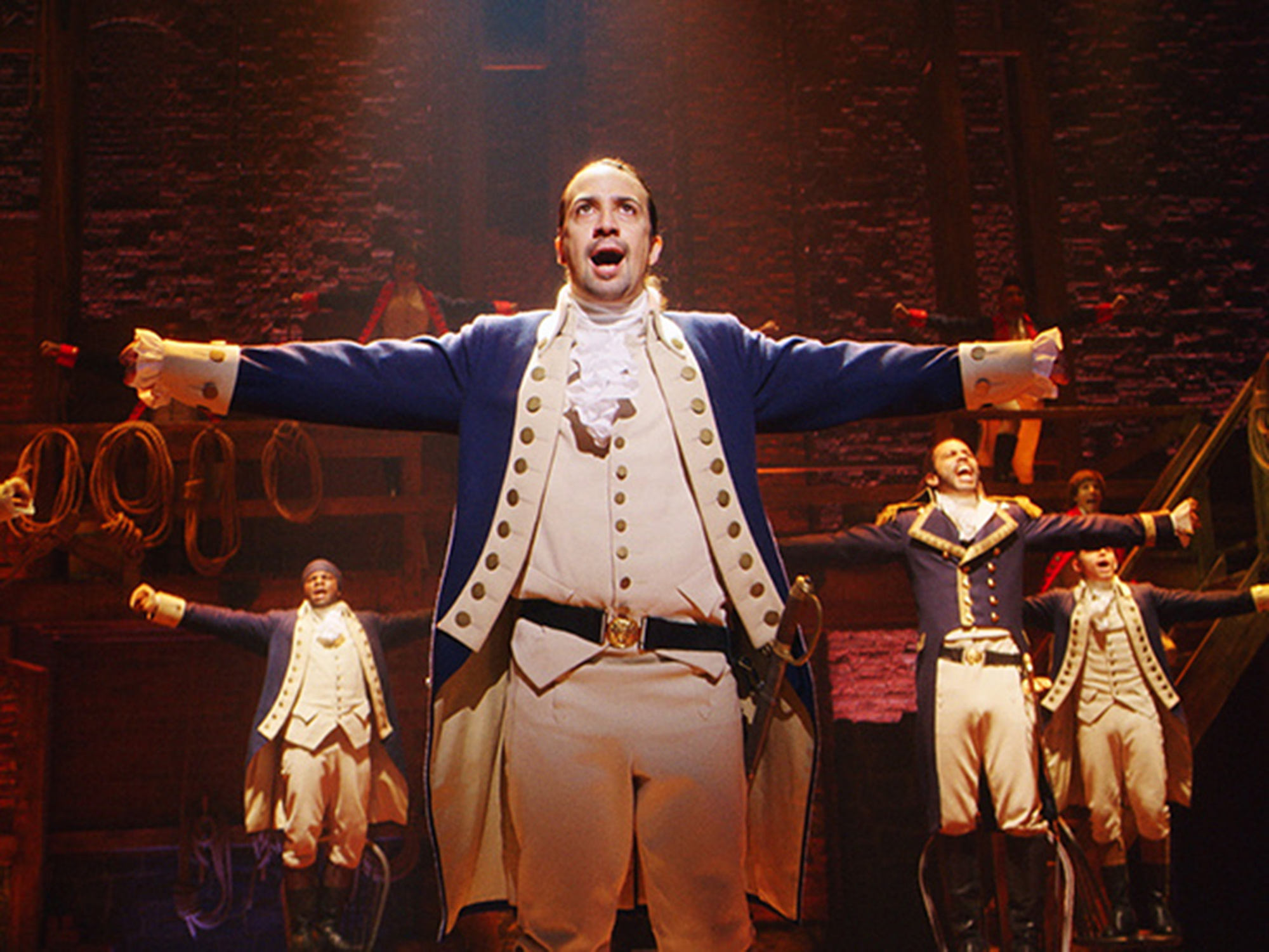
1. Hamilton
In between the off-Broadway and Broadway runs of In the Heights, composer Lin-Manuel Miranda picked up Ron Chernow’s doorstop of a book on the life of founding father Alexander Hamilton—and couldn’t put it down. A suitably loquacious portrait of a man of not-so-few words laced with rap, contemporary R&B and pop, performed by an ethnically diverse cast, Miranda’s Hamilton (now coming up on its 10th anniversary) transcended Broadway to become a cultural landmark. To be at the Richard Rodgers Theatre—we are obliged, at this point, to refer to it as “the room where it happened”—was to feel history’s eyes on you. Chernow himself was in awe of the accomplishment: “Seeing the story transformed into such vivid, three-dimensional life onstage, I had the strange sensation of eavesdropping on the private meditations of my own characters—the things left unsaid in the historical record.”
2. The Lehman Trilogy
Italian novelist and playwright Stefano Massini hit upon a singular way of telling the story of the 2008 financial crash: by starting with the three immigrant brothers who arrived in America in 1844 and founded a cotton merchant, thereby planting the seeds of American capitalism, and tracing the story from there. Adapted by Ben Power and directed by Sam Mendes in London in 2018 (later opening on Broadway in 2021), this corporate saga—think Succession blown up to epic, centuries-spanning proportions—conjured several generations of family history with just three actors inhabiting dozens of roles, contained in a rotating glass box.
3. Come From Away
In the immediate aftermath of 9/11, 38 planes and 7,000 airline passengers—along with 11 dogs, nine cats and a pair of chimpanzees—were grounded in Gander, Newfoundland, nearly doubling the population of the remote town overnight. Chaos might have ensued. Instead, the town’s residents opened their homes and hearts. Married composer-lyricist team David Hein and Irene Sankoff turned the story of a remarkable few days in the aftermath of a tragedy into Come From Away, interweaving several real stories and using the real names of real people. A life-affirming musical about community and the decency of strangers in crisis “doesn’t fix what happened that day,” noted the 2017 Tony-winning director Christopher Ashley, “but it really does give you another story to attach to that day.”
4. SIX
Toby Marlow and Lucy Moss met at Cambridge University; one was studying English lit, one was studying history. While they were there, they wrote an exuberantly fresh, postmodern show for their schoolmates to perform at a summer theater festival, recasting the six ill-fated wives of Henry VIII as pop stars, including a Catherine of Aragon modeled on Beyoncé and an Ariana Grande-esque Katherine Howard. Their pop-powered feminist remix turned history on its head—the resulting concert-style production drew legions of fans and earned its young creators a 2022 Tony for Best Score.
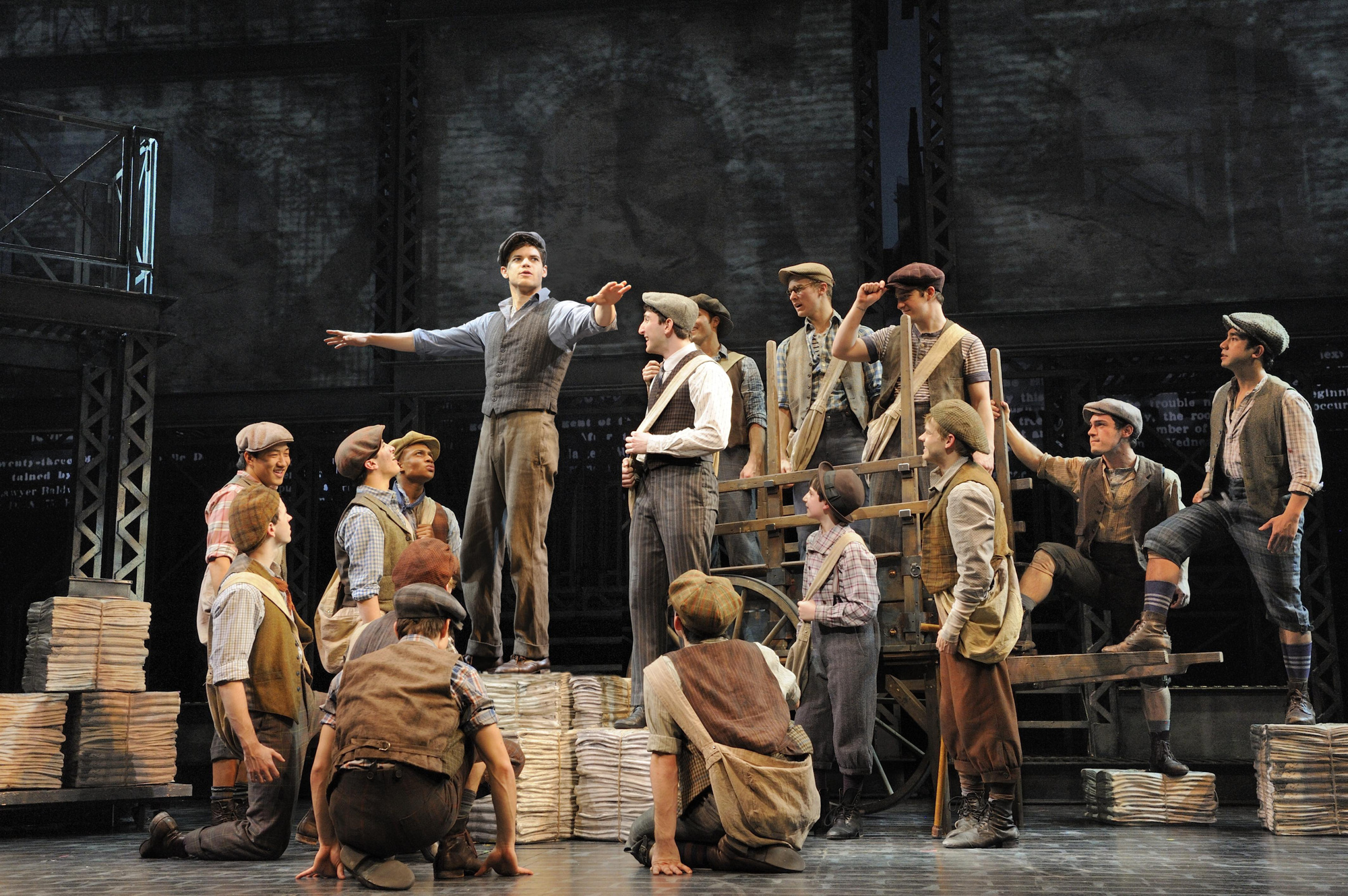
5. Newsies
On July 20, 1899, striking newsboys brought downtown New York to a standstill outside the city’s newspaper depots. “The striking newsboys had armed themselves with staves and sticks,” reported the Brooklyn Daily Eagle, “and gave the policemen on duty more trouble than the strikers of the great street railroad lines.” The protest, sparked by a price hike for newspaper bundles, pitted scrappy kids against Gilded Age publishing giants. It inspired a 1992 Disney film that struggled at the box office but found a following over time. Two decades later, the story returned in a high-energy Broadway adaptation. The 2012 production—featuring athletic choreography by Christopher Gattelli and a star-making turn from Jeremy Jordan—earned eight Tony nominations and won two, including Best Original Score for Alan Menken and Jack Feldman.
6. Suffs
In the pivotal year of 2024, one Broadway musical reminded Broadway audiences how important it is to keep marching: “’Cause your ancestors are all the proof you need / That progress is possiblе, not guaranteed.” Suffs charted the history of the U.S. suffrage movement, focusing on a diverse group of women navigating a political minefield in the pivotal historical moment leading up to the ratification of the 19th Amendment. Not shying away from the movement's internecine conflicts and complexities, Suffs radiated with the unbridled passion of its creator, writer-composer-lyricist-star Shaina Taub, as well as that of the sisterhood of the cast behind her. Taub took home two Tony Awards for her efforts. The show spawned some exceptional merch, too, in shirts that sassily announced the wearer as a “Great American Bitch.”
7. The Scottsboro Boys
As with their pioneering masterpiece Cabaret, which used nightmarish cabaret to depict the rise of Nazism, Kander and Ebb’s The Scottsboro Boys used the racist conventions of the minstrel show to tell the story of a historic miscarriage of justice: the case of nine Black teens who, in 1931, were falsely accused of raping two white women in Alabama. A first reading was held in 2004; Ebb, who was fiercely passionate about the project, died a month later. The musical saw the light of day in 2010 with an off-Broadway production at the Vineyard Theatre, tautly directed by Susan Stroman, which then transferred to Broadway, proving that the duo had lost none of their fearlessness or their desire to confront audiences with uncomfortable truths.
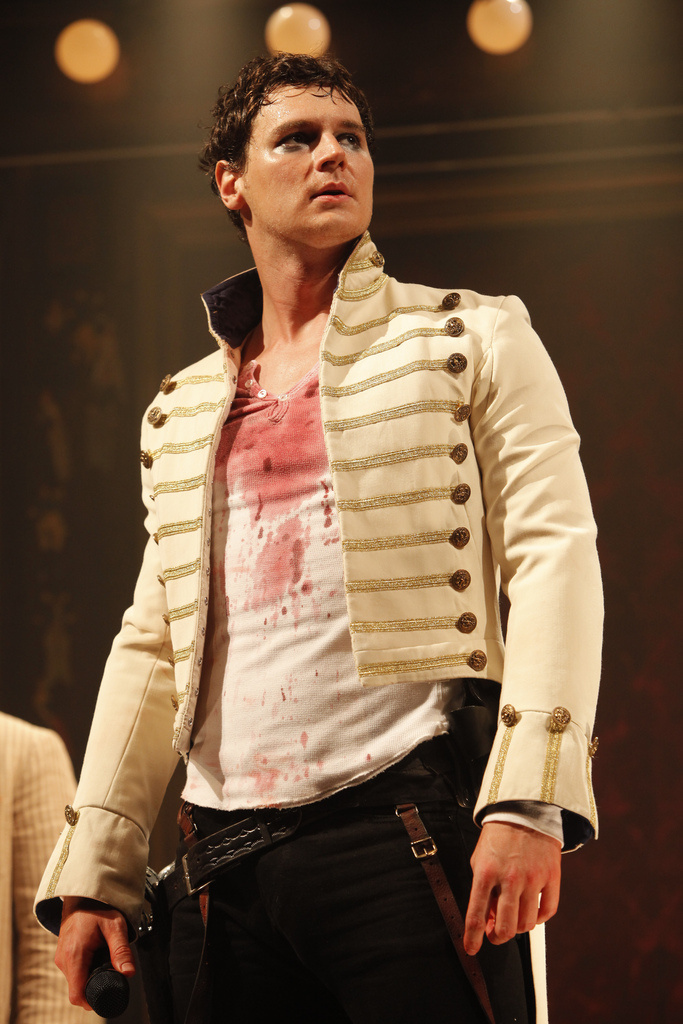
8. Bloody Bloody Andrew Jackson
Before Hamilton depicted the growing pains of a young nation, there was Bloody Bloody Andrew Jackson (2010), which reimagined the brash, populist seventh U.S. president as an emo-punk antihero, eyeliner and all. A sharply ironic portrait of the man and his policies, including the Indian Removal Act, it was the inspired vision of Alex Timbers (book and direction) and Michael Friedman (music and lyrics). The musical proved that a civics class could carry political weight and feel youthful and viscerally exciting. The marketing tagline said it all: “History just got all sexypants.”
9. Oslo
On September 13, 1993, in the White House Rose Garden, President Clinton presided over a historic handshake between Israeli Prime Minister Yitzhak Rabin and Palestine Liberation Organization Chairman Yasir Arafat. The moment symbolized their support of the Oslo Accords, which aimed to establish Palestinian self-rule in disputed territories. In 2012, the playwright J.T. Rogers met Terje Rod-Larsen, a United Nations special envoy, who revealed that he and his wife had played a key role in the secret negotiations that made the accords possible. Rogers immediately knew he had the makings of his next project. The result, directed by Bartlett Sher, became a crackling drama that won the 2017 Tony Award for Best Play.
10. Frost/Nixon
“As President of the United States … ah … I had to make a decision, as has faced most presidents, in fact, all of them, ah…” So began the stuttering beginning of 28 hours of televised interviews between disgraced former president Richard Nixon and British journalist David Frost in 1977. Peter Morgan’s Frost/Nixon turned the behind-the-scenes maneuvering of that monumental broadcast into riveting drama. Frank Langella won the 2007 Tony Award for his portrayal of Nixon; Michael Sheen was equally electric as his interlocutor. Morgan took some narrative license in blending fact and fiction, but the production, directed by Michael Grandage, delivered a nail-biting portrait of politics, the media and ego.
11. All The Way
In 1963, Lyndon B. Johnson was a political punchline. Then three shots rang out in Dallas. Pulitzer-winning playwright Robert Schenkkan sifted through a mountain of research—speeches, transcripts, newspaper coverage, privately recorded phone calls, film footage, FBI files—to portray the first astonishing year of LBJ’s presidency. The show featured 17 actors playing more than 60 historical figures. Bryan Cranston gave a magnetic—and surprisingly sympathetic—performance as Johnson. He won the 2014 Tony Award for Best Actor in a Play.
12. Here Lies Love
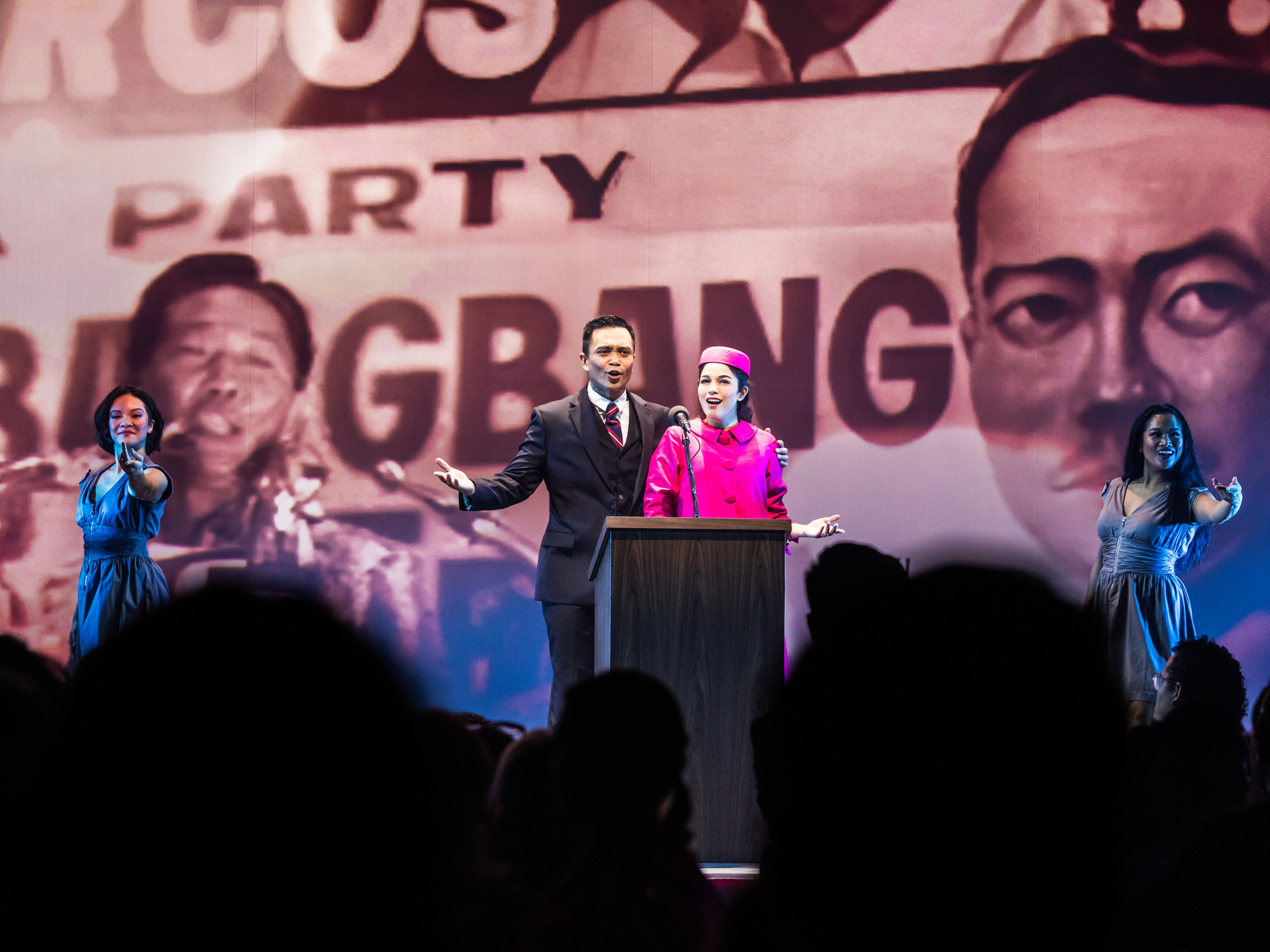
Dictators and disco, together at last. At Here Lies Love, staged at the Broadway Theatre—transformed into a glitzy nightclub—a portion of the audience shimmied, swayed and took on the role of the Filipino people in one of the darkest chapters of the nation’s history. Conceived by David Byrne with music by Byrne and Fatboy Slim, the immersive musical traced the rise and fall of Imelda Marcos, who joined her autocrat husband in a brutal regime. The show premiered at the Public Theater in 2013 and opened on Broadway 10 years later. Some accused the show of trivializing the suffering of the populace and glorifying the Marcoses—under their martial law, 70,000 people were incarcerated, 35,000 were tortured and 3,200 were killed—others saw it as an emotional paean to a people’s struggle for democracy.
13. I Am My Own Wife
Charlotte von Mahlsdorf’s extraordinary story arrived on Broadway in 2003, a short time after her death in 2002. In writing I Am My Own Wife, playwright Doug Wright drew on his own conversations with Charlotte, a trans woman and devoted antique collector, while also questioning the details of her life: she had survived the Nazis (including a Nazi father) and the Communists. The play, which went on to win the Pulitzer and Tony, explored her resilience and contradictions as well as the reliability of her account. Jefferson Mays, in a tour-de-force performance, channeled Charlotte and more than 30 other characters, bringing to life a singular and complicated figure whose story still challenges easy categorization.
14. Shuffle Along, Or the Making of the Musical Sensation of 1921 and All That Followed
In the early 20th century, Broadway was called the Great White Way—not just for its lights, but for the lack of Black performers on its stages. The 1921 sensation Shuffle Along broke that pattern, drawing Black audiences to the orchestra and paving the way for major roles for Black performers. In 2016, a meta-musical with a mouthful of a title—Shuffle Along, or, the Making of the Musical Sensation of 1921 and All That Followed—told the behind-the-scenes story of the original show. Written and directed by George C. Wolfe, the production spotlighted the overlooked artists who made the original possible. As Lottie Gee, considered Broadway’s first Black ingenue, Audra McDonald transported audiences to a different time. The cast, which also included Brian Stokes Mitchell and Billy Porter, danced up a storm under choreographer Savion Glover.
15. Grey Gardens
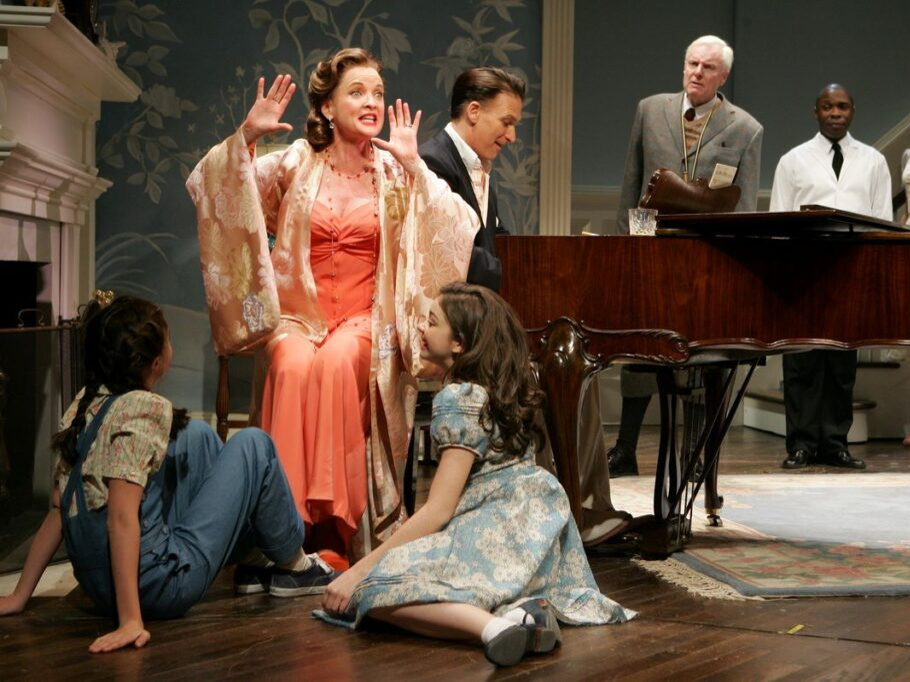
The Maysles brothers’ 1975 documentary about Edith Bouvier Beale and her daughter, “Little Edie"—two reclusive relatives of Jackie Kennedy living in a decaying East Hampton mansion—was a partly heartbreaking, partly hilarious portrait of a highly delusionary mother-daughter relationship. In the hands of writer Doug Wright, composer Scott Frankel and lyricist Michael Korie, the 2006 stage adaptation magnified the story’s power to haunt in song, with some of the film’s most quotable lines set to sumptuous melodies. When she heard that a musical was in the making, Little Edie reportedly said, “Oh, that’s glorious. With all we didn’t have in life, we always had music and song.”
16. Operation Mincemeat
It’s one of the few episodes of World War II that might, at a stretch, be described as "whimsical": the Allies duping the Germans by planting false documents, alluding to a fake invasion, on a corpse that was just minding its own business. Leave it to a troupe of irreverent Brits to not just mention the war but turn a declassified wartime deception operation into a wacky romp. A scrappy fringe show blown up to Broadway proportions, Operation Mincemeat fires jokes at the audience with the merciless rapidity of a Gatling gun—but perhaps its most surprising feat is getting across some genuine poignancy too.

17. Fela!
“The only acceptable excuse for not going to see this show is if you’re DEAD!!!” raved The Roots’ Questlove after catching Fela! The 2009 musical was based on the story of Nigerian Afrobeat pioneer and political activist Fela Aníkúlápó Kuti. Immersing audiences in Lagos' Shrine nightclub, it focused on the year government forces violently shut down one of Kuti's performances. With Sahr Ngaujah making a volcanic Broadway debut in the title role, the show featured the 10-piece Brooklyn Afrobeat band Antibalas on stage playing joyfully propulsive music entirely new to Broadway, matched beat for beat by the vibrant choreography of co-writer, director and choreographer Bill T. Jones.
18. Thurgood
It takes a person of courage and heroic imagination to take on systemic racism head-on. Thurgood Marshall was one such man, going from mischievous Baltimore kid to the highest court in the land and helping to dismantle school segregation along the way. Embodying Marshall in George Stevens Jr.’s 2008 one-man play, Laurence Fishburne brought Marshall to life with warmth and authority. “It's a great lesson," Fishburne said, "but it's also this wonderful man that you get to spend some time with who's like your favorite uncle, sitting with you on the back porch, sipping his drink and regaling you with his stories—which you've heard a hundred times, but they only get richer every time you hear them.”
19. Dead Outlaw
A singularly ineffective robber in life, Elmer McCurdy went on to have a bizarre and eventful afterlife: among its other postmortem adventures, his corpse was put on display as a cautionary anti-drug display and eventually ended up as set dressing in a carnival ride. His story has inspired books, documentaries and this past season’s foot-stomping folk-rock musical by David Yazbek, Erik Della Penna and Itamar Moses, populated by a series of American hucksters and lowlifes and starring the spectacularly still Andrew Durand as Elmer in life as well as death.
20. Million Dollar Quartet
One day in 1956, four music legends—Elvis Presley, Jerry Lee Lewis, Carl Perkins and Johnny Cash—found themselves in the same room at Sun Record Studios in Memphis, Tennessee. Fortunately for the annals of music history, someone had the foresight to hit “record.” Colin Escott and Floyd Mutrux’s 2010 musical brought the rock ’n’ roll Mount Rushmore to life, with all the hip-swivelin’ and piano-thrashing you'd expect. If it resembled a concert more than a drama, few complained, especially with a setlist that included “Blue Suede Shoes,” “Fever,” “Walk the Line,” “Sixteen Tons,” “Hound Dog” and more.
21. Lempicka
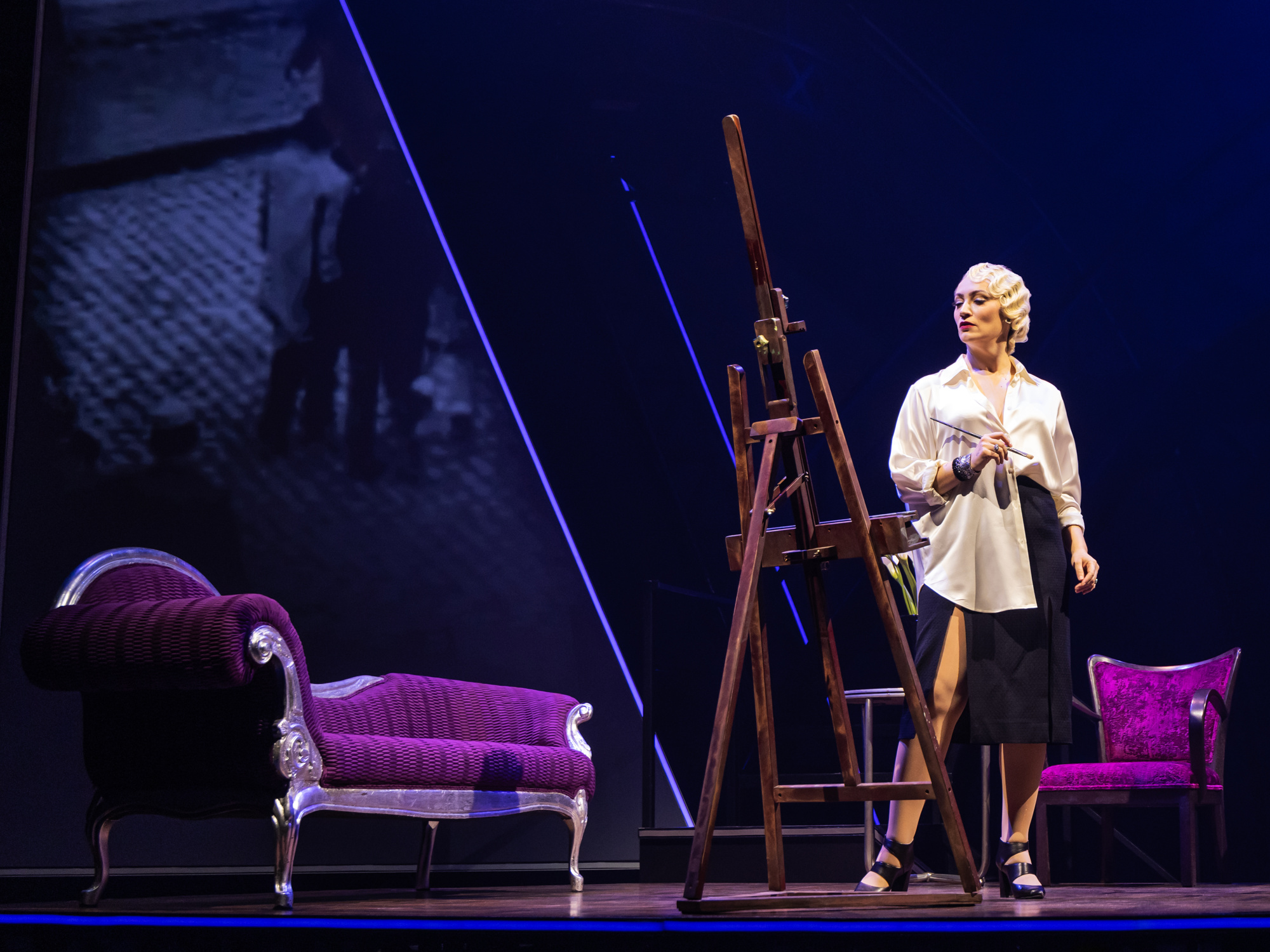
The paintings of the queer Polish Art Deco artist Tamara de Lempicka are striking for their sense of cool glamor, strength and unflinching modernity. As made clear in the 2024 musical by bookwriter-lyricist Carson Kreitzer and composer Matt Gould, the same qualities might be attributed to the painter herself, an unflinchingly modern woman whose life story—she fled St. Petersburg to Paris after the Bolshevik Revolution, not the last time she had to flee the country—hums with the tempestuous energy of the first half of the 20th century. The Rachel Chavkin-direction production was short-lived, but the memory of it looms large among a devoted fan base drawn to the painter's legacy of independence and defiance.
22. Taboo
A heady celebration of the queer outsiders who reshaped the U.K. club scene in the ’70s and ’80s, Taboo told the story of Boy George, the former Culture Club frontman, and fashion designer Leigh Bowery, with George himself playing the latter. The 2003 Broadway transfer, produced by Rosie O’Donnell, came with its share of challenges: for one, the show’s original London nightclub setting may have better matched its raw, subversive energy than a traditional Broadway theater. Still, the score was well received. With a new book in the works, a retooled revival may yet give Taboo another life.
23. Chaplin
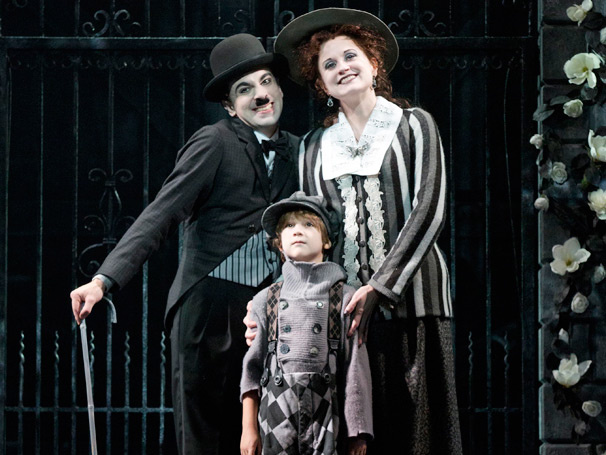
Though he rarely spoke on screen, Charlie Chaplin would have loved the idea of his life becoming a musical. A born performer, he first took the stage at the age of five when his performer mother lost her voice. The 2012 musical, with music and lyrics by Christopher Curtis, followed Charlie’s journey from poverty in London to royalty in Hollywood, highlighting his tumultuous life and fractious relationships along the way. As the Little Tramp, Rob McClure conveyed Chaplin's physical brilliance and agile wit as well as the soul and pathos of the man behind the mustache.
24. Lucky Guy
Writer Nora Ephron died in June 2012 of leukemia at the age of 71. Her final project, Lucky Guy, opened on Broadway a year later. The play was both a love letter to New York City and an elegy for a gritty era of journalism told through the story of controversial tabloid New York reporter Mike McAlary. Tom Hanks made his Broadway debute as McAlary, mustache and all. It was a suitable send-off from Ephron, a former New York Post reporter herself who understood the adrenaline-fueled energy of the newsroom, imbued with the author's usual spiritedness, zippy dialogue and insight.
25. A Class Act
When the composer-lyricist Edward Kleban, best known for his lyrics for A Chorus Line, died at the age of 48 in 1987, he left behind a trunkful of songs for unproduced musicals. A few close friends discovered his archive and came up with the concept for A Class Act, a deeply personal musical that doubled as both tribute and portrait. Structured as a reverse-time memory play, with figures such as Lehman Engel and composer Marvin Hamlisch making appearances, A Class Act was a heartfelt love letter to one of the hitherto unsung heroes of musical theater as well as to musical theater itself—and the starry-eyed, all-too flawed souls who devote their lives to it.

